Spector — QC in Mixed Reality
A Mixed Reality tool for composite blade manufacturing quality control — giving QC Operators, Repair Technicians, and Engineers a shared, spatially-grounded record of defects on the physical blade.
Design a hands-free Marker UX for HoloLens that locks virtual annotations to real surfaces, turning blade defects into a live digital twin and enabling smooth handover between QC roles.
- Mixed Reality
- HoloLens
- UX Design
- Spatial UI
- QC
- Manufacturing
- Digital Twin
About
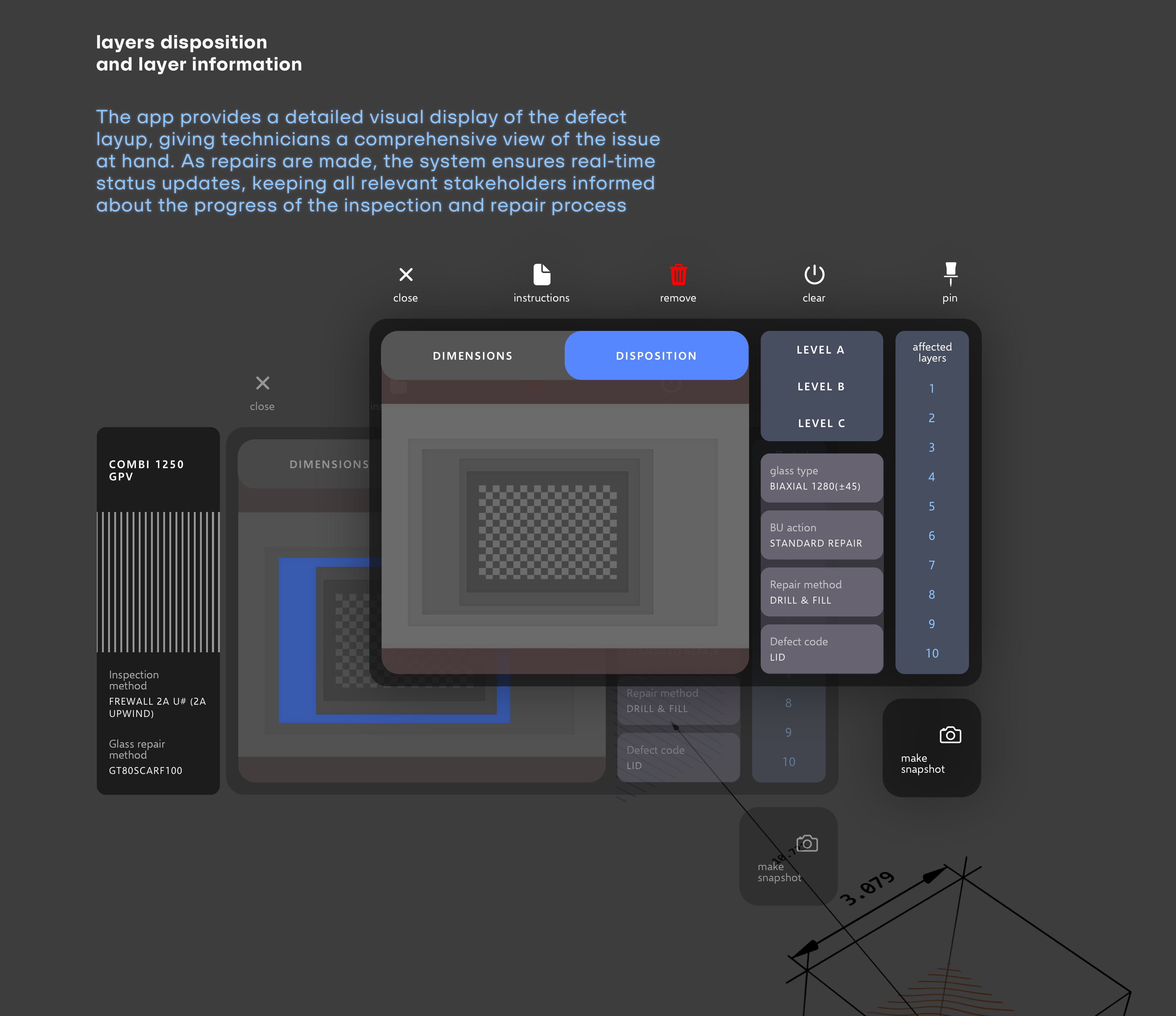
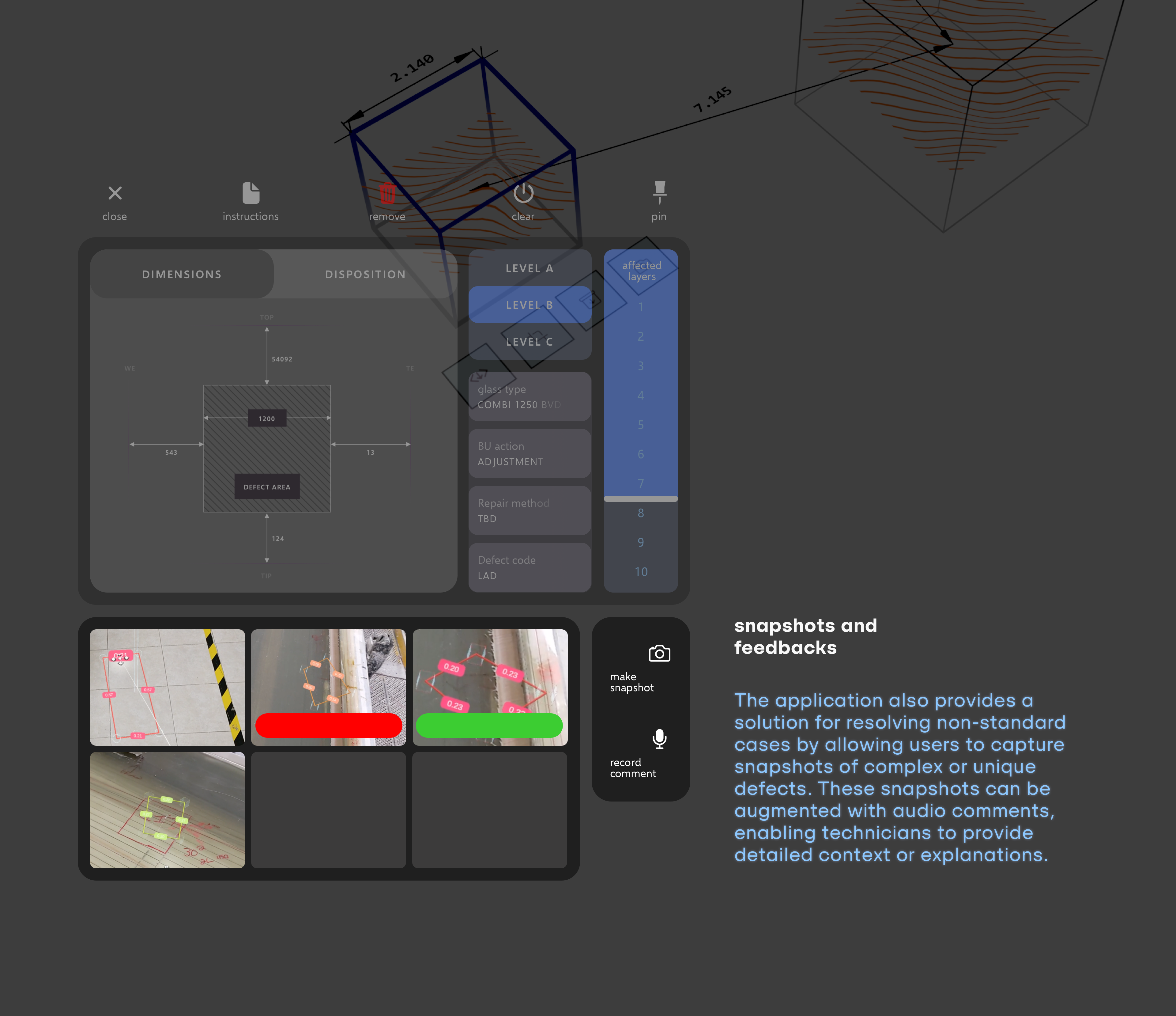
Spector is a mixed-reality QC tool for composite blade manufacturing. The core object is the Marker — a virtual annotation tied to a precise location on a physical blade.
Three roles share the same artefact: QC Operators identify and mark defects, Repair Technicians act on them in the field, and Engineers review the full picture remotely. Spatial awareness is the foundation that makes this handover coherent.
QC Workflow
Too Free to Be Useful
The first approach: a tap spawns a marker one meter in front of the user, draggable to any position. In a QC context, this is a problem. A floating marker and the defect it represents are two different things.
Operators had to align markers by eye. Technicians receiving that spatial data couldn’t trust it. Hands occupied, no reliable connection to the blade — the approach failed on every front.
A Snap Reveals the Principle
A virtual assistant came next. Tap it, and a marker appears at its feet — snapping to the floor as a side effect. That unplanned snap-to-surface behavior turned out to be the critical insight.
A marker that adheres to the physical surface stops being a label and becomes a coordinate. Repair Technicians can walk up to the blade and expect the marker to be exactly where the damage is.
Point, Place, Hand Over
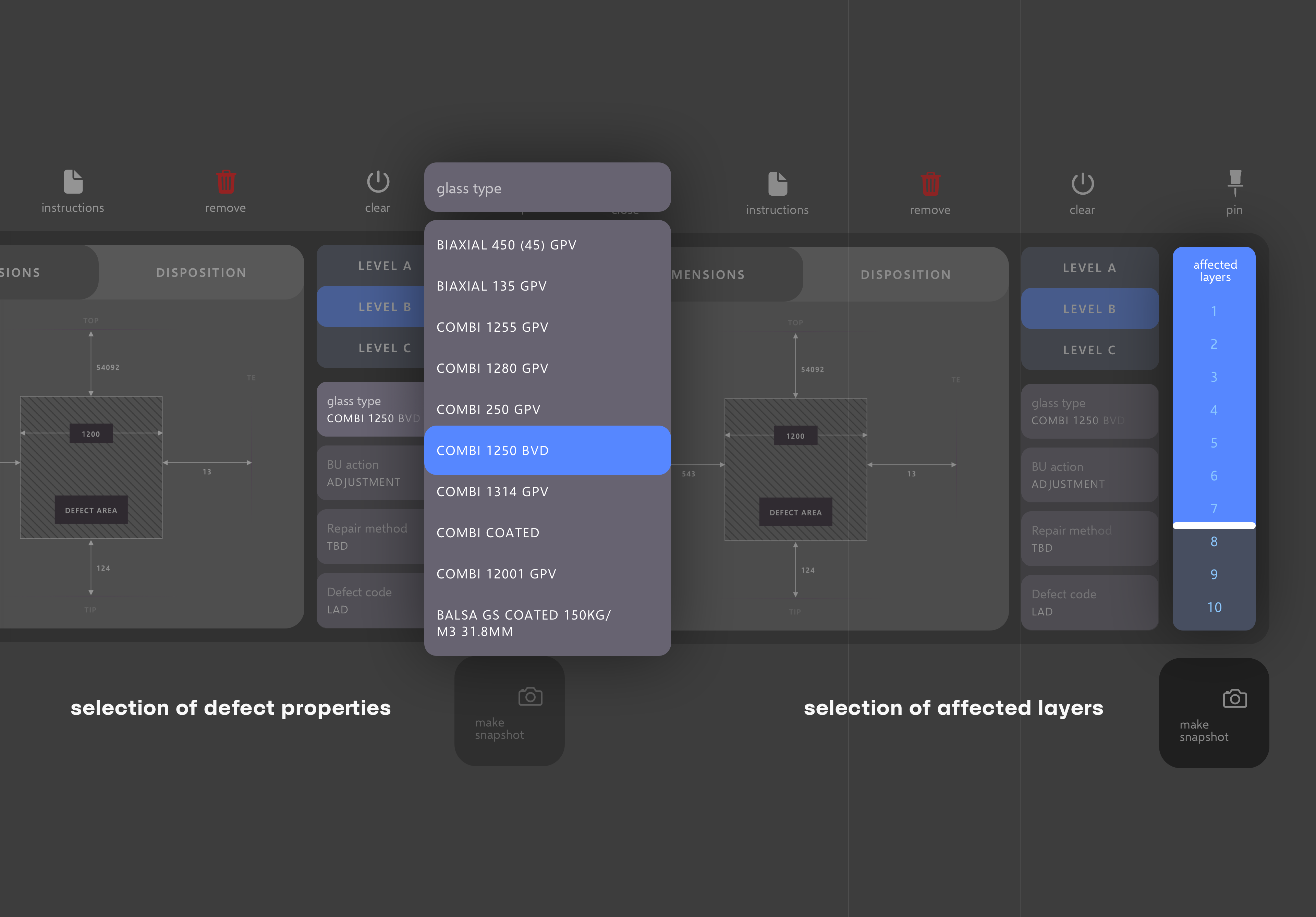
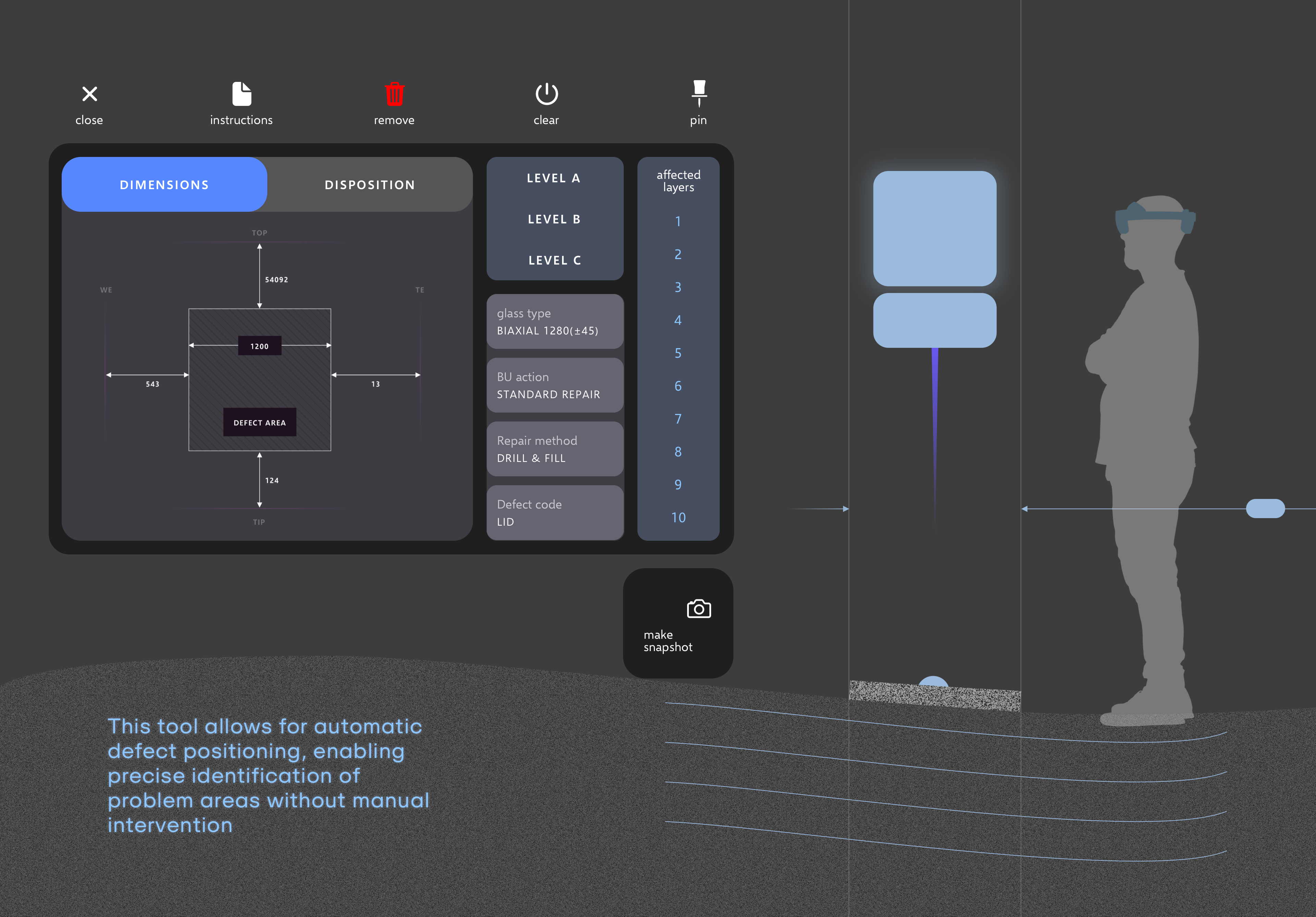
The virtual assistant was replaced with ray-cast placement. On HoloLens, rays shoot from the user’s hands — point and click, hands-free. The marker lands exactly where the operator is pointing, locked to the spatial mesh.
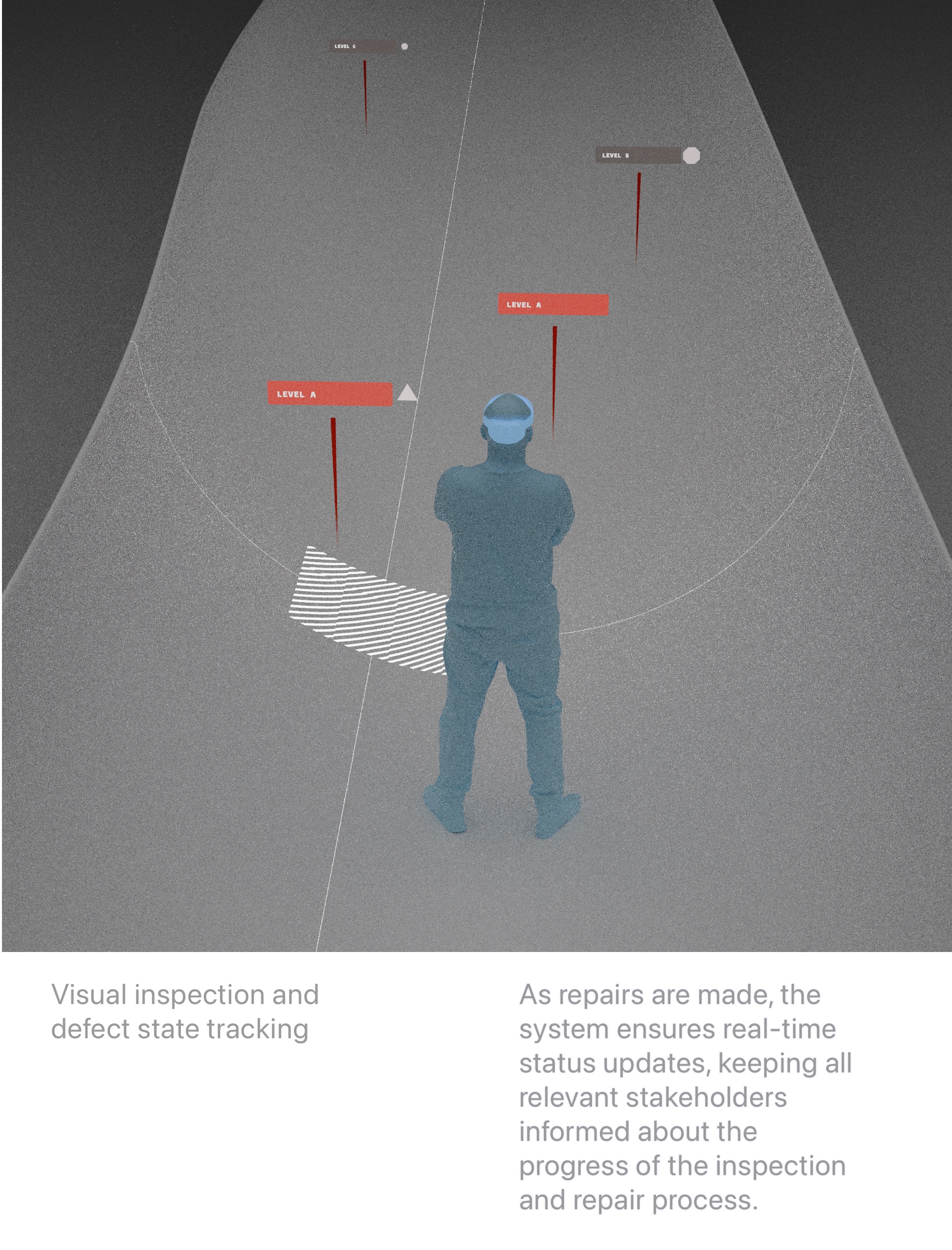
Markers placed this way accumulate into a digital twin of the blade’s condition. QC Operators annotate defects, Repair Technicians receive the same spatial record on their device, and Engineers inspect the full picture without being on-site.
Virtual mesh alignment with real-world geometry is imperfect. Markers can be repositioned after placement, re-snapping to nearby surfaces as needed.